Sleep Is the New Status Symbol: Inside Dozoff's Mission to Redefine Rest
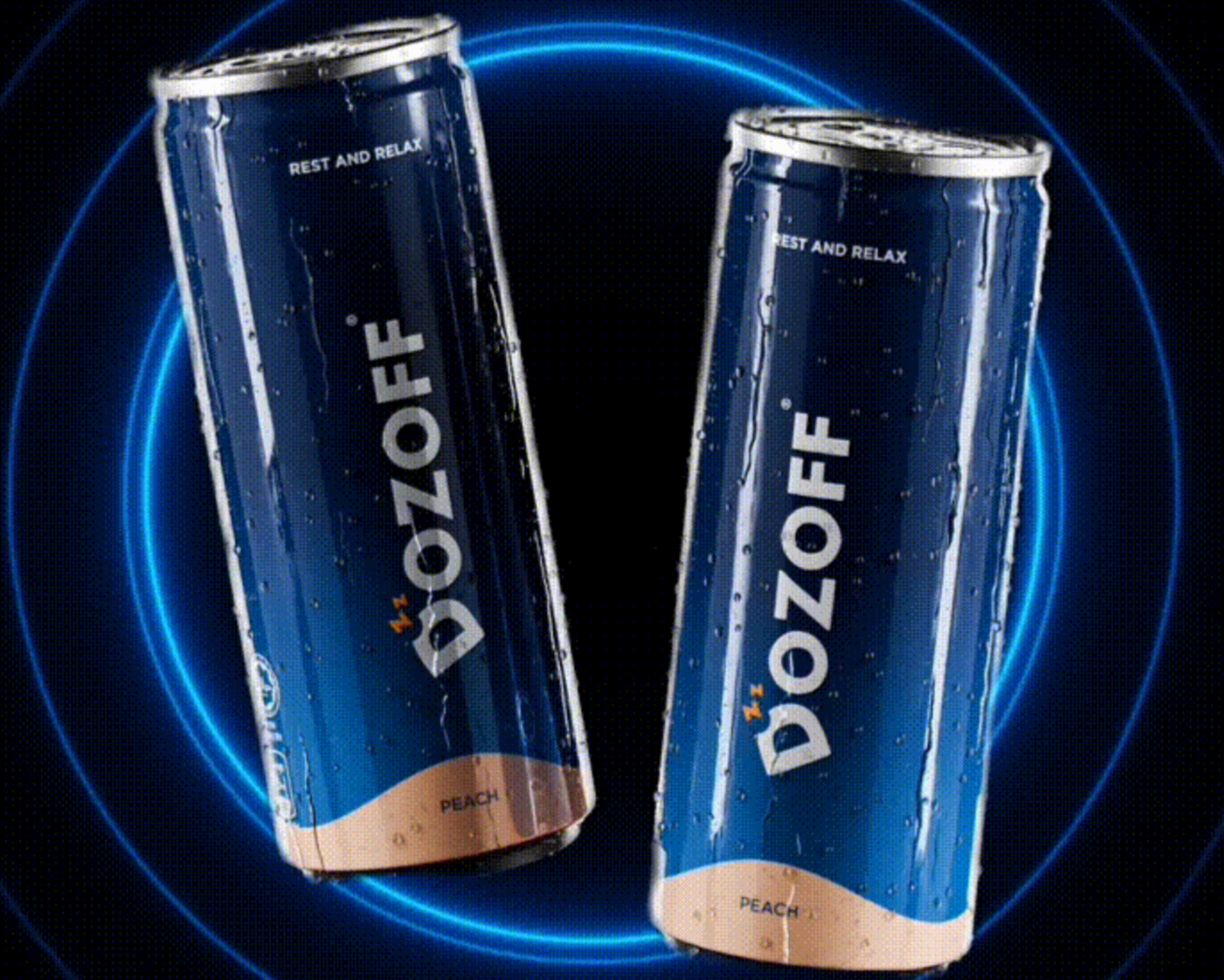
Sleep has long been treated as an afterthought in the wellness conversation, something to chase only after we've drained every last drop of energy from ourselves. But as burnout, overstimulation and always-on lifestyles become the norm, recovery is finally stepping into the spotlight. Enter Dozoff, a functional beverage brand that's challenging the culture of caffeinated hustle by making rest feel intentional rather than indulgent. Instead of promising a quick fix or a knockout solution, the brand is encouraging a different mindset altogether: that better performance begins with better recovery. We sat down with Dozoff's founder to talk about why "switching off" has become one of the most radical wellness movements of our time, the psychology behind our obsession with productivity, and why sleep might just be the next frontier in modern wellbeing.
Interview with Dozoff Founder, Chin Wui Kong
You’ve described Dozoff as “the opposite of energy drinks.” That’s a pretty bold positioning. What made you feel that modern consumers needed an entirely different conversation around beverages?
It was bold, but it was also practical.
When you introduce a genuinely new functional beverage, the hardest part isn’t the product, it’s the education. People understand energy drinks. They understand coffee, isotonics and the whole "pick-me-up" category. Those shelves are crowded and the concept needs no explanation. But a drink designed to help you wind down? That was a blank space in people's minds. We had to give them a reference point.
So we used the thing everyone already knows, the energy drink, and positioned ourselves as its mirror image. Energy drinks stimulate you to push through. Dozoff does the inverse: it helps your body do what it's naturally trying to do anyway, which is rest. Framing it as "the opposite of an energy drink" made an unfamiliar idea instantly understandable.
But there's a deeper point underneath the positioning. We've built an entire beverage culture around overriding fatigue with caffeine, sugar and stimulants to squeeze more alertness out of an already tired body. Ironically, a lot of that disrupts the very sleep you need to actually feel energised the next day. It's a cycle that quietly works against you.
We wanted to interrupt that conversation. The message is simple: your real peak doesn't come from stimulating an exhausted system. It comes from being properly recovered in the first place. Energy drinks sell you a borrowed boost. We're trying to sell you the real thing, at its source.
There’s almost a cultural pride today in being busy, productive and constantly reachable. When did you personally realise that being permanently "switched on" wasn’t actually sustainable?
I've always believed in striking a balance in everything, and that includes the balance between being "switched on" and "off."
What I'd push back on is the idea that these two are in conflict. They're not. It's actually the opposite. Only when you give your body and mind the rest they need can you truly perform at your best when you are switched on. So protecting your "off" isn't the enemy of productivity, it's what makes the "on" sharper.
That's why I keep saying sleep and recovery isn't downtime. It's performance infrastructure. It's the foundation everything else is built on. It's what separates going fast from going far. I'd rather build something sustainable than burn bright and burn out.
And one thing I want to be clear about: we're not selling sleep to lazy people. We're selling it to the ambitious ones, the people who take tomorrow seriously. The ones who understand that resting well tonight is how you show up tomorrow.
You built Dozoff with the idea of helping people unwind, not knock out. Why was it important for you to avoid the traditional sleep-aid language and take a softer approach instead?
To be honest, Dozoff was never meant to replace medicinal sleep aids. Those serve people with clinical, serious sleep conditions, and that's a different level entirely.
But statistically, a huge number of people sit before that line. They have mild to moderate trouble winding down, the racing mind at midnight, the inability to switch off after a long day. They don't have a medical problem. That's exactly why traditional sleep-aid language doesn't fit them. The moment you use words like "treatment" or "remedy," you make them feel like patients, when really, they just want to sleep a little better.
So the softer approach was deliberate. We wanted Dozoff to be the natural, everyday go-to, something you reach for the way people grab a coffee when they need a boost, just for the opposite purpose. No stigma, no clinical baggage. Just a simple, intentional choice at the end of your day.
There's a real benefit to that. If something this accessible helps people wind down, a lot of them can avoid escalating to harder, prescription-based options altogether. Sometimes the gentler tool is the one people will actually use consistently, and consistency is what changes habits.
Do you think younger professionals today are more exhausted than previous generations, or are we simply becoming more honest about burnout and overstimulation?
Speaking for myself, I think both. But I think the honesty part is newer, and more important.
Previous generations were exhausted too. Our parents' generation worked brutal hours, sacrificed weekends and built businesses on pure grit. But they didn't have a vocabulary for burnout. You just pushed through. Complaining about being tired was almost seen as ingratitude. You have a job, you have a family, what are you complaining about? So a lot of it got buried.
What's different now isn't just the conversation. It's the texture of the exhaustion. We've got layers that didn't exist before.
The always-on phone. The blurred line between work and life, especially post-pandemic, when your bedroom became your office. The dopamine economy. Every app, every notification and every scroll is engineered to keep you stimulated. You finish work and your brain doesn't get a transition. It just keeps going on a different screen.
I feel this personally. I'm running multiple things simultaneously. The work itself is demanding. But what drains me faster isn't the volume of work. It's the cognitive switching. The inability to ever fully close a tab in your head.
So yes, younger professionals today are dealing with a genuinely new kind of load. Not necessarily harder in the physical sense, but relentlessly mental. The recovery tools haven't caught up.
That's the gap Dozoff sits in. Not just a product for people who can't sleep, but a signal for people who never fully stop. We're not solving exhaustion. We're creating a moment where you consciously choose to.
Rest used to feel reactive, something people prioritised only after hitting a wall. Are we entering an era where recovery becomes part of everyday wellness in the same way exercise or nutrition already is?
I think the demand for recovery or good sleep has always been there. After all, we spend nearly one third of our lives asleep. That's biology, not a trend.
The shift is already happening. Look at how fitness evolved. There was a time going to the gym was considered a luxury, or even vanity. Now it's just responsible. Nutrition followed the same arc. People track macros, read ingredient labels and think about what they're putting into their bodies. Sleep is next in that progression. It's just taken longer because it's harder to commodify and easier to ignore.
What I find exciting is that recovery is actually the multiplier. It's what makes your exercise and nutrition actually work. You can train hard and eat clean, but if you're not recovering well, you're leaving performance on the table. The science on this is increasingly clear.
So yes, I think we're entering that era. The brands that helped normalise fitness and clean eating showed the playbook: education first, then habit, then culture. Dozoff wants to be part of writing that chapter for sleep.
Your ingredients and messaging suggest you’re encouraging intentional use rather than dependence. In a wellness market that often pushes daily rituals, why was that philosophy important to you?
This comes back to something fundamental about how we see our consumer.
The person reaching for Dozoff is already self-aware. They're reading labels, thinking about what they put into their body and making intentional choices. If we came in with messaging that said "take this every night," we'd actually be talking down to them. Worse, we'd be creating a dependency narrative that undermines the whole premise of functional wellness.
There's a version of this category that could go very wrong. You engineer something that becomes a crutch. People can't sleep without it, they panic if they run out and they need escalating doses over time. That's not wellness. That's just a softer version of the same trap that made sleeping pills problematic.
We specifically chose ingredients like L-Theanine, Magnesium and Valerian Root that work with your body's natural rhythms rather than overriding them. Nothing that sedates. Nothing that creates a rebound effect. The formulation philosophy and the brand philosophy are actually the same: we want to support your body in doing what it already knows how to do.
The ritual framing matters here too. A ritual is something you choose. A dependency is something that chooses you. That's a very different psychological relationship with a product, and we were deliberate about which side of that line we wanted to be on.
Honestly, if someone uses Dozoff for two weeks, builds better sleep habits and needs it less, I'd consider that a win. Because they'll trust us more for it. And trust, in wellness, is everything.
You came from fast-moving, tech-driven environments yourself. Were there habits or behaviours from that world that directly shaped what Dozoff eventually became?
Definitely. A few things carried over. Some good, some I had to unlearn.
The biggest one is the bias toward speed. In tech, you ship fast, you test and you iterate. You don't wait for perfect. That shaped how we built Dozoff. We didn't spend two years in a lab chasing the ideal formula in secret. We launched, we listened and we refined. The product today is the result of a lot of small feedback loops, not a single grand plan. That's a very tech way of building.
The other habit is treating everything as a system. In those environments, you're constantly thinking about metrics, cause and effect, and what actually moves the needle versus what just feels productive. So when I looked at sleep, I didn't see it emotionally. I saw it as an input. Recovery as infrastructure. That framing came directly from thinking like an operator.
But here's the unlearning part, and it's the more important answer. Those same environments are exactly what broke my relationship with rest. The always-on culture, the badge of honour around being reachable at all hours, the idea that sleep was the thing you optimised away. I lived that. It didn't make me more productive. It made me reactive and dull.
So in a way, Dozoff is both a product of that world and a response to it. The discipline and the systems thinking, I kept those. The self-destruction dressed up as ambition, that's the exact thing we're trying to give people an off-ramp from.
Do you think overstimulation today is more of a technology problem, a work culture problem, or something deeper about how modern life has evolved?
I think it's tempting to blame technology because it's the most visible culprit. But that's too easy. Technology is the accelerant, not the root cause.
If you trace it back, I think it's something deeper about how we've come to measure our own worth. Somewhere along the way, busyness became a proxy for value. Being in demand, being reachable and having a packed calendar became signals of importance. So we don't overstimulate ourselves purely because the technology allows it. We do it because, on some level, it makes us feel like we matter.
Work culture amplifies that. It rewards the appearance of effort, the fast reply, the late-night email, the visible hustle, sometimes more than the actual quality of thinking. So people optimise for looking engaged rather than being effective. Technology hands you the perfect tools to perform that engagement 24 hours a day.
So really, it's all three, but in layers. The deepest layer is psychological, a question of worth and identity. Work culture is the social structure built on top of that. Technology is the delivery mechanism that makes it frictionless and constant.
That's why I don't think the solution is simply "use your phone less" or "set work boundaries." Those are surface fixes. The real shift is internal, giving yourself permission to stop without feeling like you've fallen behind. That's the hardest part, and honestly, it's the part I'm still working on myself.
Dozoff can't fix the psychology. But it can be a small, physical cue that says, "It's okay to switch off now." Sometimes you need an object to give you permission your own mind won't.
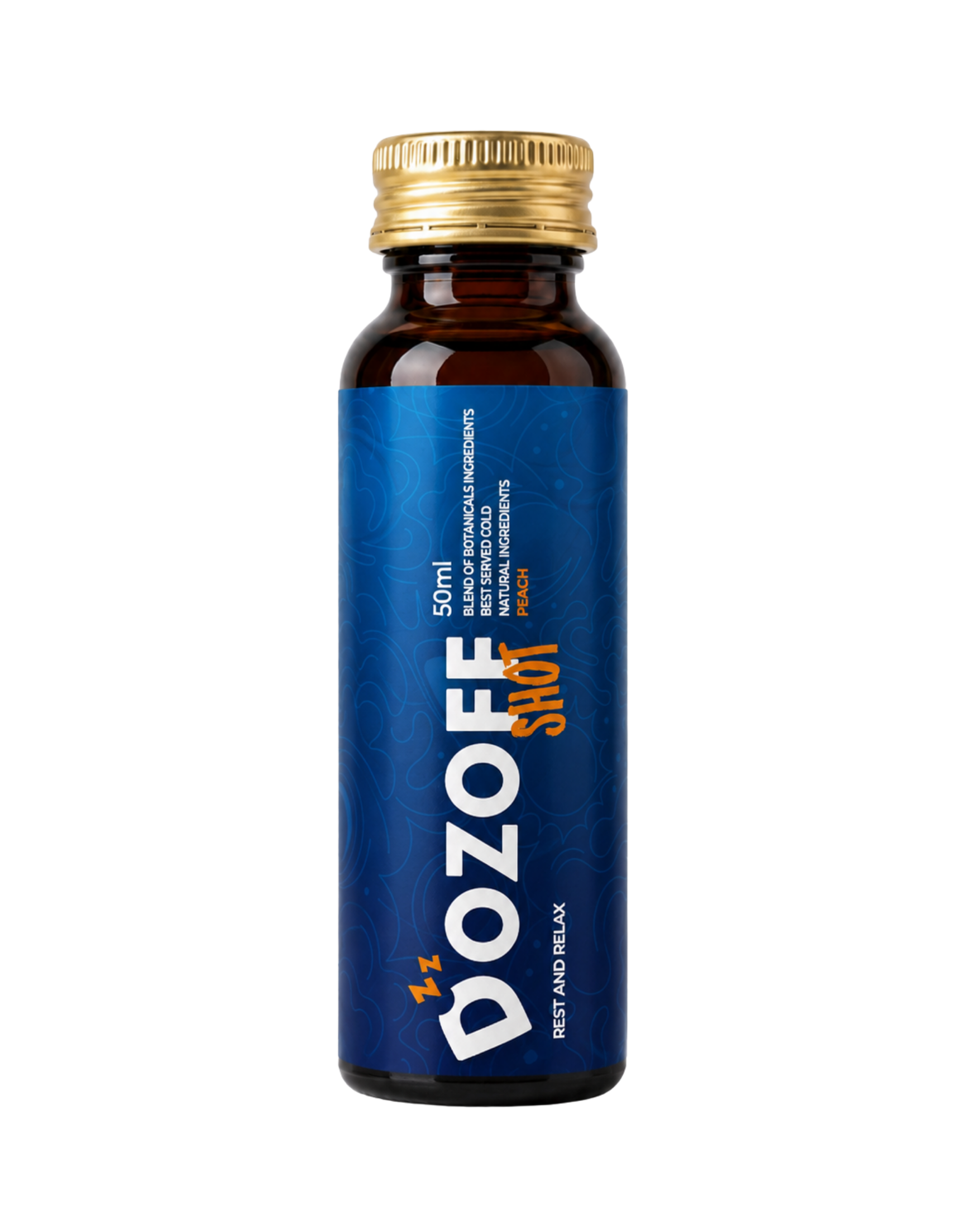
With Dozoff Shot launching for travel and irregular schedules, are we designing products around better rest or accepting that people will continue living increasingly fragmented lifestyles?
That's a sharp question because it gets at a real tension, and I won't pretend it isn't there.
The honest answer is we're meeting people where they actually are, not where we wish they were.
I'd love to live in a world where everyone has a consistent 10pm wind-down, eight hours of uninterrupted sleep and a perfectly protected morning routine. But that's not the reality for a flight attendant on rotation, a founder catching a red-eye to a buyer meeting, a shift worker or a parent with a newborn. Telling those people to simply "fix their schedule" is useless advice. Their fragmentation isn't a character flaw. It's their life.
So the Shot isn't us endorsing the fragmented lifestyle. It's us refusing to abandon the people living it. There's a difference between accepting a reality and surrendering to it. We're saying your schedule is chaotic, fine. You still deserve a tool that helps you recover within that chaos.
I'd also push back gently on the idea that it's either one or the other. I actually think these two things work together. The Shot meets the immediate need, the irregular night, the time-zone mess. But our deeper mission is still to help people build better recovery habits over time. One is the entry point. The other is the long game.
If anything, the people with the most fragmented lives are the ones who need recovery the most, and who've been served the least by traditional sleep products built around a tidy, predictable routine. That's exactly the gap we're stepping into.
So no, we're not just accepting fragmentation. We're giving people a way to stay whole inside it.
If relaxation and recovery become one of the next major wellness categories, what do you hope people start redefining first: productivity, success or what it means to truly rest?
If I could only pick one, it's productivity. Because I think that's the domino that knocks over the other two.
Right now, we define productivity as output per unit of time. How much can you cram in? How many hours can you stay switched on? That's an industrial-era definition. It made sense when work was physical and linear. It makes no sense for knowledge work, where your best ideas come from a rested mind, not an exhausted one.
If we redefine productivity to include the quality of your thinking, not just the quantity of your hours, everything else shifts. Suddenly rest isn't the thing you do instead of being productive. It becomes a core input to being productive. You stop seeing the eight hours you're asleep as time you're "losing" and start seeing them as the foundation that makes the other sixteen actually count.
Once productivity gets redefined, success follows automatically because we measure success by our definition of productivity.
If being "always on" stops being impressive, if the person bragging about four hours of sleep starts to sound reckless rather than heroic, then success quietly starts to mean something healthier. Sustainable. Long-term. Whole.
Rest redefines itself last, as a by-product. Once you stop seeing it as weakness or indulgence, you naturally start treating it as what it actually is: a skill, a discipline and even a competitive advantage.
So productivity is where I'd start. Change what we admire, and you change what we chase. That's the real cultural shift. The product is just a small nudge in that direction. The conversation is the actual point.