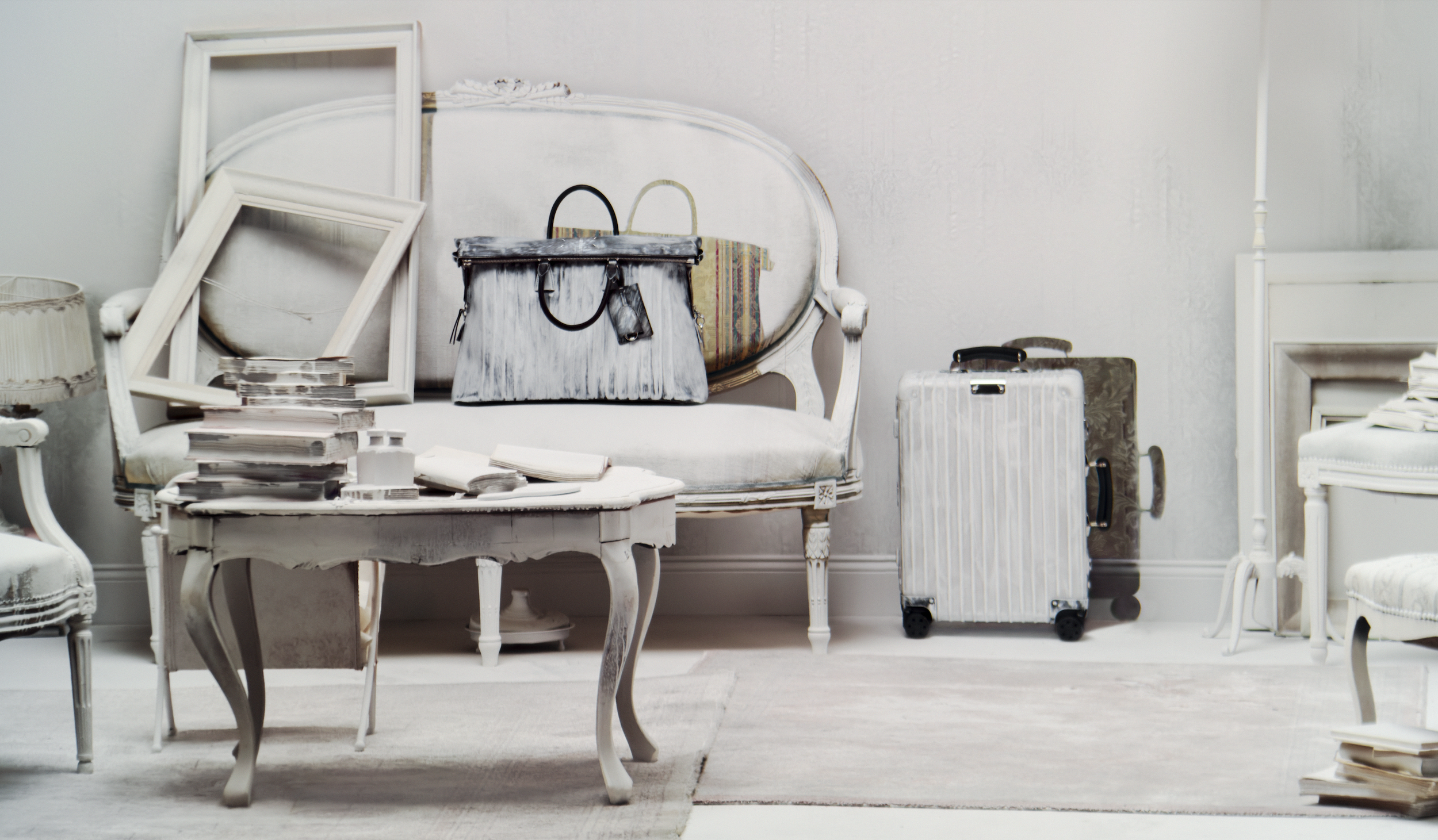
Some things look better with age. RIMOWA and Maison Margiela are making a rather convincing case for it with a new limited-edition travel collection that celebrates scratches, imperfections and the beauty of things well lived.
There is something quite satisfying about a suitcase that has seen things. The scratches from an airport conveyor belt, the dents picked up somewhere between Paris and Tokyo, the little marks that somehow become reminders of places you have been. While most of us would instinctively reach for a polishing cloth, RIMOWA and Maison Margiela would rather you leave them alone.
The two design Houses have joined forces for a limited-edition collection that brings together RIMOWA's iconic Classic Cabin suitcase and Maison Margiela's 5AC XL bag. More than a meeting of luxury luggage and avant-garde fashion, the collaboration explores a shared appreciation for objects that evolve with time, wear and personal experience.

At the heart of the collection is an interesting design contradiction. RIMOWA has long embraced the natural wear that comes with travelling, allowing scratches and dents to become part of a suitcase's identity. Maison Margiela, meanwhile, has built much of its creative language around deconstruction, imperfection and the visible traces of time. Its approach to ageing is often intentional, turning what might traditionally be considered flaws into something worth celebrating.
The result is a collection that doesn't ask to be kept pristine. In fact, it is designed to become more personal the longer you own it.
The collaboration brings together two recognisable signatures: RIMOWA's unmistakable aluminium grooves and Maison Margiela's Bianchetto technique. Hand-applied across every piece, the white paint finish is expected to crack and flake as time passes, gradually developing a patina unique to its owner. No two pieces will age in quite the same way, making each set a personal record of the journeys it takes.
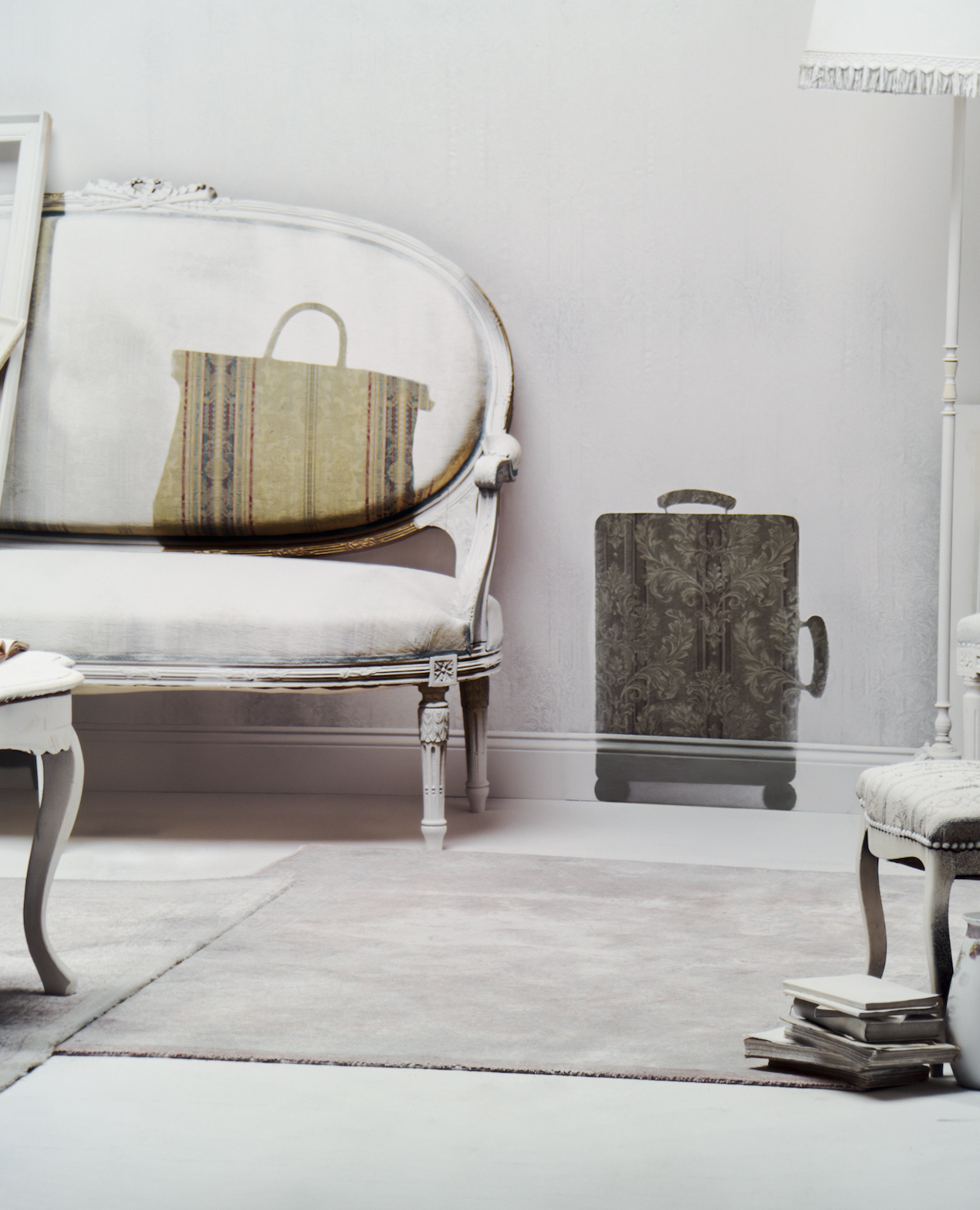
Both design codes come with their own history. RIMOWA first introduced its now-iconic grooves in 1950, drawing inspiration from the aviation industry. They have since become an unmistakable feature of the German luggage House. Bianchetto, on the other hand, dates back to Maison Margiela's beginnings. In 1988, Martin Margiela painted all the furniture in the House's first design studio white. As the paint cracked and peeled, the resulting surface became a visual expression of time passing. What started as a treatment of everyday furniture eventually became one of the Maison's signature techniques.
For this collection, the two signatures extend beyond their usual territory. RIMOWA's grooves appear across both the suitcase and bag, while the Bianchetto finish gives the aluminium and leather surfaces a distinctly Maison Margiela treatment.
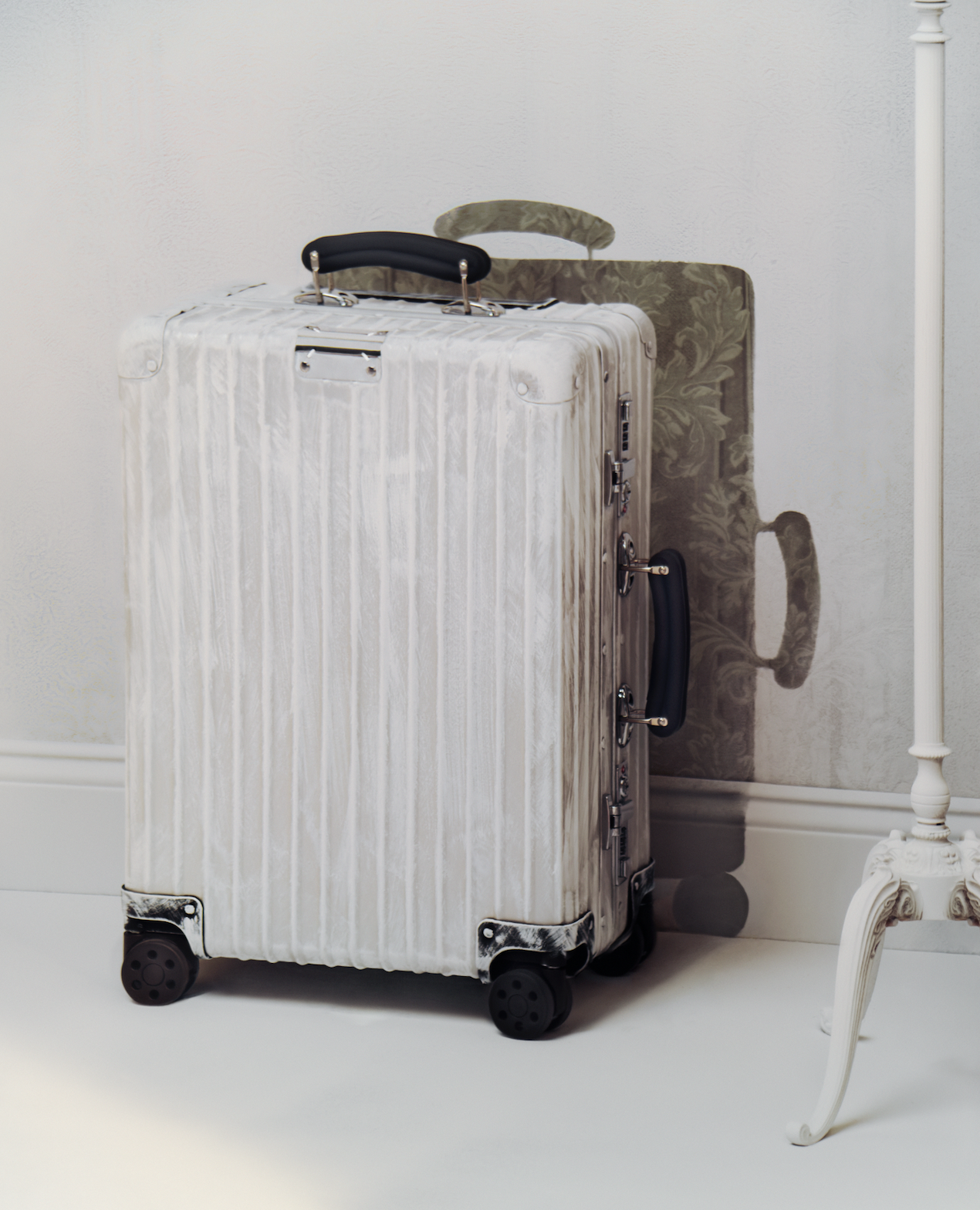
The RIMOWA x Maison Margiela Classic Cabin takes the collaboration's deconstructed approach a step further, particularly on the inside. Its white interior lining features visible stitching and overlocked edges, deliberately exposing details usually kept hidden. The effect is reminiscent of Maison Margiela's approach to garment construction, where internal structures and the making process are often brought into view rather than concealed.
The design also draws a direct connection to the Maison's 5AC bag, which features an internal lining that extends beyond its leather exterior. Even the suitcase's anodised aluminium logo badge gets a considered finishing touch, secured with four slanted white-thread stitches.
Crafted at RIMOWA's historic factory in Cologne, Germany, the Classic Cabin retains the practical details that have made the luggage House a travel favourite. These include a stage-free telescopic handle, its signature Multiwheel system and TSA-approved locks. Because a suitcase can be conceptually interesting and still needs to survive an airport.
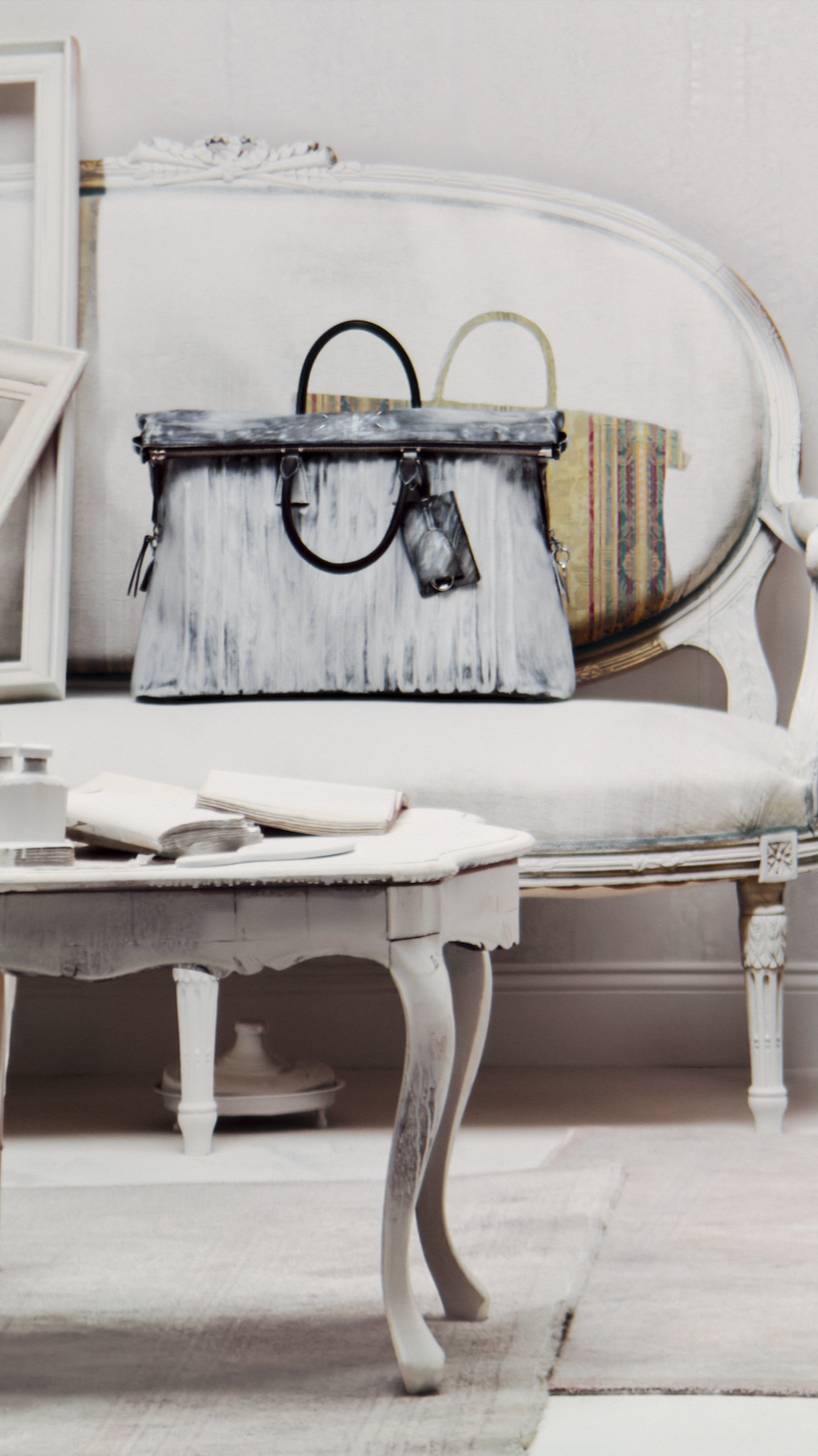
Its companion, the RIMOWA x Maison Margiela 5AC XL Bag, is equally considered. Rather than stitching the signature grooves into the leather, they are sculpted directly into the material using a high-frequency technique that creates a precise three-dimensional pattern without a single needle or thread.
Designed with versatility in mind, the bag comes with a cross-body leather strap for everyday use, along with removable leather loops that allow it to be secured onto the Classic Cabin. Once attached, the grooves align across both pieces, creating a cohesive travel set that looks as though it was designed to exist together from the beginning.
Both pieces also come with a bespoke leather tag, combining RIMOWA's traditional travel-inspired address tag with Maison Margiela's distinctive key bell. It is a small detail, but one that brings the two Houses' identities together rather neatly.
The campaign, directed and photographed by Dexter Lander, takes the collection's central idea and gives it a rather dramatic setting. Set inside a Haussmannian apartment, the visuals capture a paint-sprinkler spectacle as white Bianchetto covers the Classic Cabin, the 5AC and the surrounding room. Once the paint settles, the unmistakable silhouettes of both pieces remain imprinted against the walls, almost like traces of their presence.
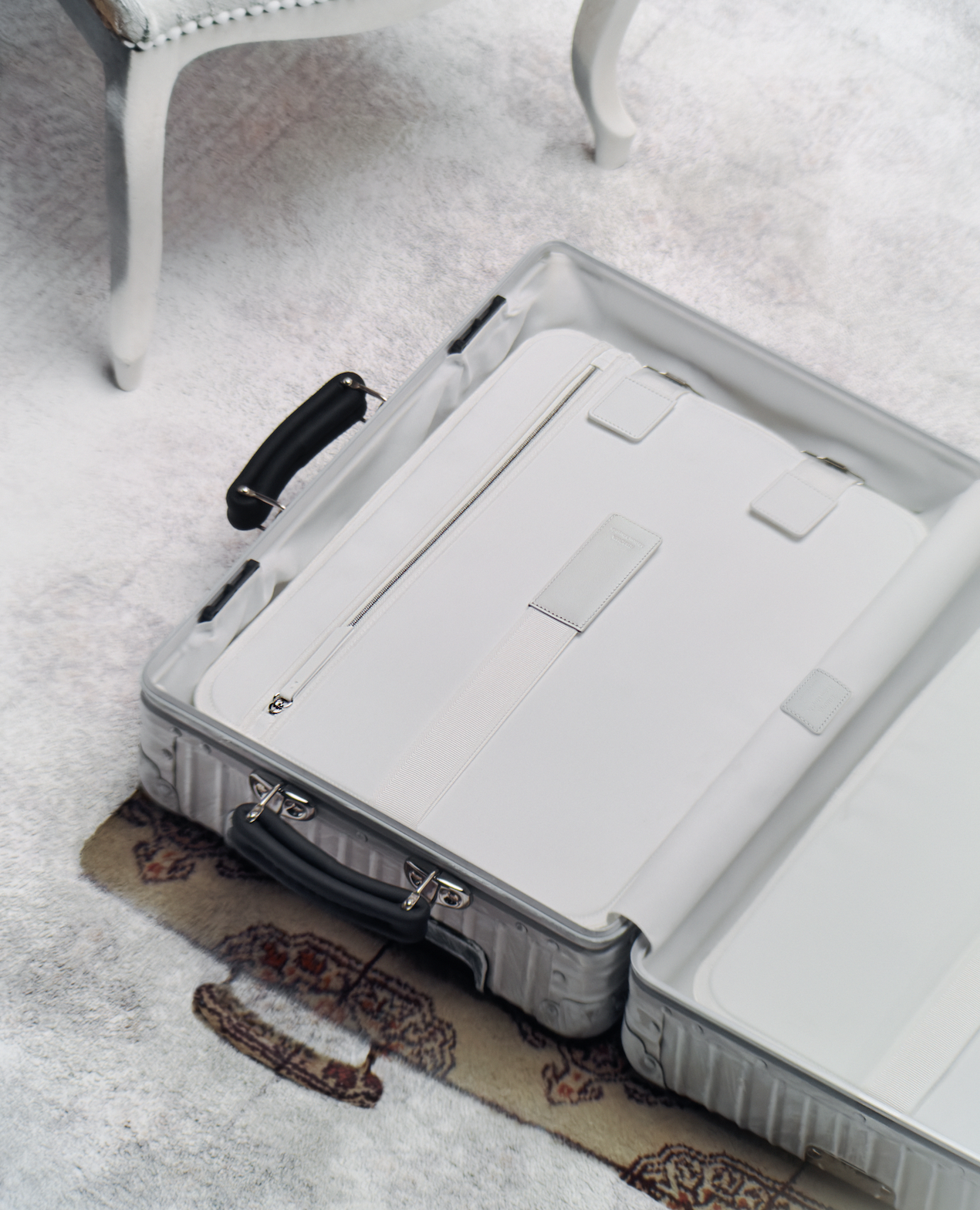
It is an appropriately unconventional way to introduce a collection built around leaving a mark.
Ultimately, RIMOWA and Maison Margiela are offering a different perspective on luxury. Instead of treating wear as something to avoid, they make it part of the appeal. The collection is a reminder that the most meaningful possessions are rarely the ones kept behind glass. They are the ones that accompany us, collect stories and change along the way.
And if your suitcase comes home looking a little less than perfect, perhaps that's the point.
The RIMOWA x Maison Margiela Classic Cabin (RRP MYR 18,150) and 5AC XL Bag (RRP MYR 20,400) will be available from 19 November 2026 at select RIMOWA and Maison Margiela boutiques, as well as online at RIMOWA.com and MaisonMargiela.com.