Where Dough Meets Time: Inside the Layered World of Grumpy Bagels 1905
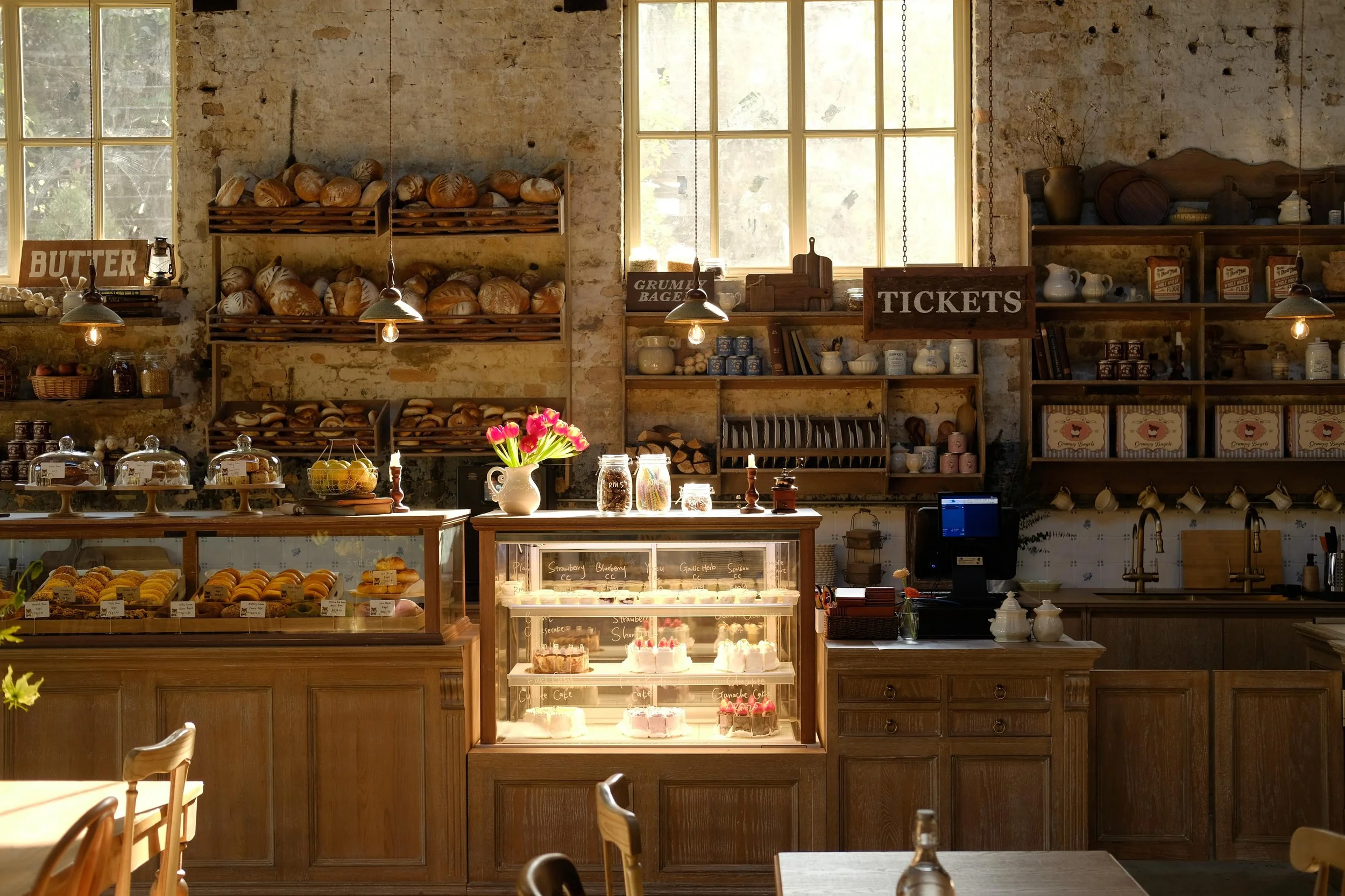
There’s something quietly cinematic about Grumpy Bagels 1905. Before the scent of freshly baked dough settles in, the building speaks first. Set within a century-old British-era train garage in Sentul, the space doesn’t try to outrun its past—it leans into it. Weathered brick, oxidised metal, and soaring ceilings remain intact, carrying the weight of time. What unfolds within is not a renovation, but a reinterpretation.
At the centre of this transformation is founder Claire Tan, working alongside Dilly Chai of Poi Studio. Together, they’ve shaped a bakery café that feels less like a commercial space and more like a lived-in narrative—one that moves between eras without friction. Materials were chosen with the same level of discernment as ingredients: nothing excessive, nothing out of place. Cosentino surfaces appear not as focal points, but as quiet anchors, threading continuity through the kitchen and bathroom.
For Claire, the vision extends beyond aesthetics. This is a space built on intention. Every corner was designed to feel layered and storied, as if it had evolved organically over time. The building’s history isn’t polished away; it’s preserved, then gently pushed forward into a new function.
Poi Studio approached the project with a similar sensitivity. Rather than staging a contrast between old and new, the design creates a dialogue. The existing structure—with its raw, imperfect textures—sets the tone. New elements respond rather than compete. There’s restraint here, and a certain humility in how materials are allowed to exist alongside one another.
Nowhere is this more evident than in the kitchen.
The Working Core

At Grumpy Bagels 1905, the kitchen isn’t hidden—it’s central. Claire describes it as the heart of the operation, where her team spends most of their day. It needed to function seamlessly under pressure, but also feel considered enough to inspire the people working within it.
Designing for a bakery in full motion comes with its own set of realities. Heat, moisture, flour, constant cleaning—this is not a static environment. Surfaces are tested daily, not just visually but physically. Workflow had to be efficient, ergonomics carefully planned, and hygiene uncompromising.
The choice of Dekton Nacre from Cosentino’s Kraftizen collection emerged from this balance of demands. It delivers durability without sacrificing visual depth, holding its own within an environment that is both intense and meticulous. Importantly, it integrates without disrupting the building’s character. Its tone and texture sit comfortably against aged brick and original concrete, contributing to the space without trying to replicate what’s already there.
There’s a subtle cohesion at play too. By carrying the same material language into different parts of the café, the design avoids fragmentation. Instead, it feels composed—quietly consistent.
A Pause Between Moments
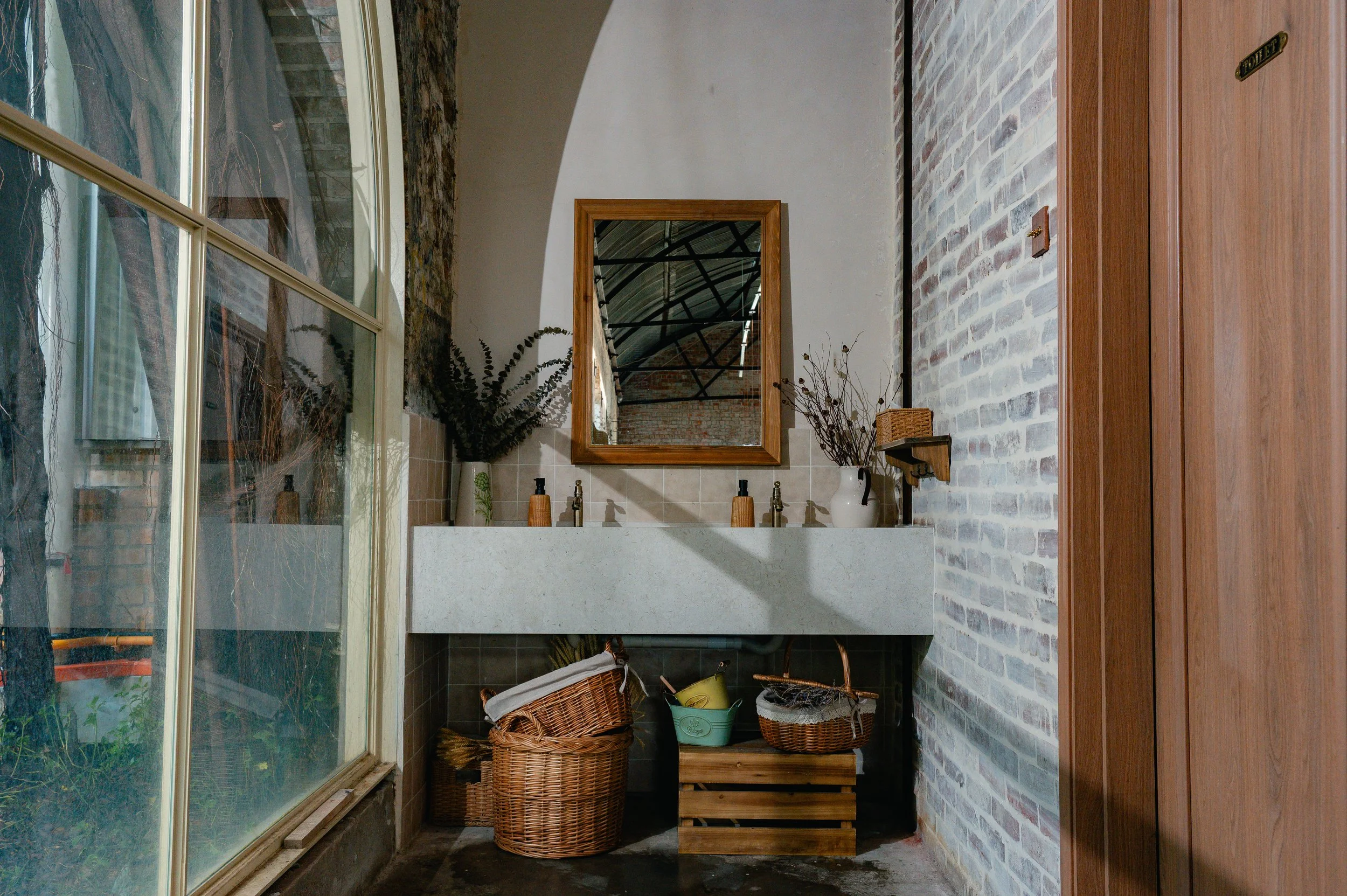
Even the bathroom, often overlooked in hospitality design, carries the same level of intent. Claire treats it as an extension of the overall experience rather than an afterthought. It’s a space that reflects how much a place truly considers its guests.
Here, the mood shifts slightly. Still grounded in the same palette and sensibility, the bathroom introduces a softer rhythm—a moment of pause. The aim wasn’t to impress, but to create a sense of calm that lingers.
Dekton Nebbia from the Pietra Kode collection was selected for this space, not just for its aesthetic compatibility but for its performance. With constant exposure to water and humidity, durability becomes essential. Low porosity and resistance to stains ensure that the space remains as considered over time as it is on day one.
More than anything, it reflects a commitment to consistency. Every corner of Grumpy Bagels 1905 is treated with equal care, whether it’s front-of-house or tucked away.
Built to Endure

What makes Grumpy Bagels 1905 resonate isn’t just its design—it’s the way everything holds together. There’s a clear throughline of craft, from the baking to the architecture, from the smallest detail to the broader spatial narrative.
This isn’t a place designed for quick impact. It’s built to last—physically, aesthetically, and emotionally. Materials are chosen not for trend, but for longevity. The result is a space that feels grounded yet evolving, shaped by both history and daily use.
In the end, Grumpy Bagels 1905 doesn’t just serve bagels. It offers an experience that unfolds gradually, where every surface, texture, and detail plays a role in telling a story that’s still being written.