Valentino Pre-Fall 2026: Where Memory Refuses to Sit Still
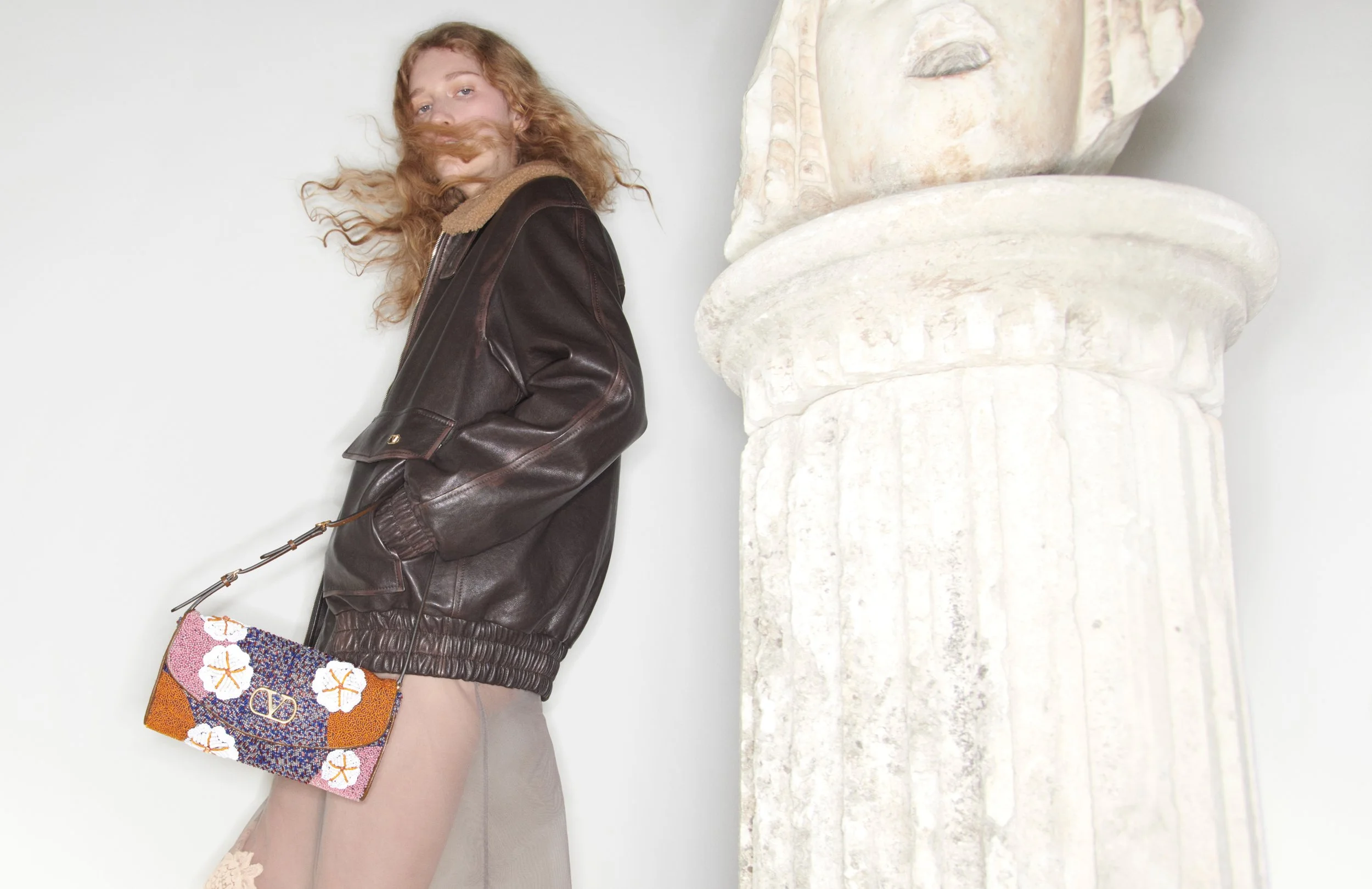
There are houses, and then there are spaces that hum with a life of their own. The palazzo once inhabited by Cy Twombly in Bassano in Teverina belongs firmly to the latter. Acquired in 1975, the villa became more than a residence—it was his retreat, his testing ground, his quiet refusal of the outside world’s noise. For over three decades, Twombly lived here with deliberate restraint, letting creativity settle slowly into the porous tufa walls. Visitors were rare, limited to a tight circle. What emerged within those rooms would go on to define much of his practice. Even now, the building holds onto that energy. It feels suspended, detached from contemporary rhythm, yet charged with a past that hasn’t faded—it lingers.
This is where Valentino situates its Pre-Fall 2026 campaign. Not as a decorative choice, but as a deliberate act. The palazzo isn’t just scenery—it’s a collaborator. Its presence anchors the campaign within a lineage that stretches back decades, threading together art, fashion, and image-making. There’s a clear historical echo here: in 1968, Henry Clarke photographed Valentino Garavani’s white collection inside Twombly’s Roman apartment, shared with Tatia Franchetti, for Vogue US. That moment wasn’t just documentation—it was a convergence of creative worlds.
Fast forward to now, and the story resumes in another of Twombly’s homes. But this isn’t about revisiting an archive or recreating a mood. Valentino approaches it differently—less nostalgia, more resonance. The campaign taps into something less fixed, more fluid. A continuity that doesn’t sit neatly in time, but shifts, fractures, and reappears in altered form. It’s about what endures—not as a constant, but as a trace that mutates as it moves forward.
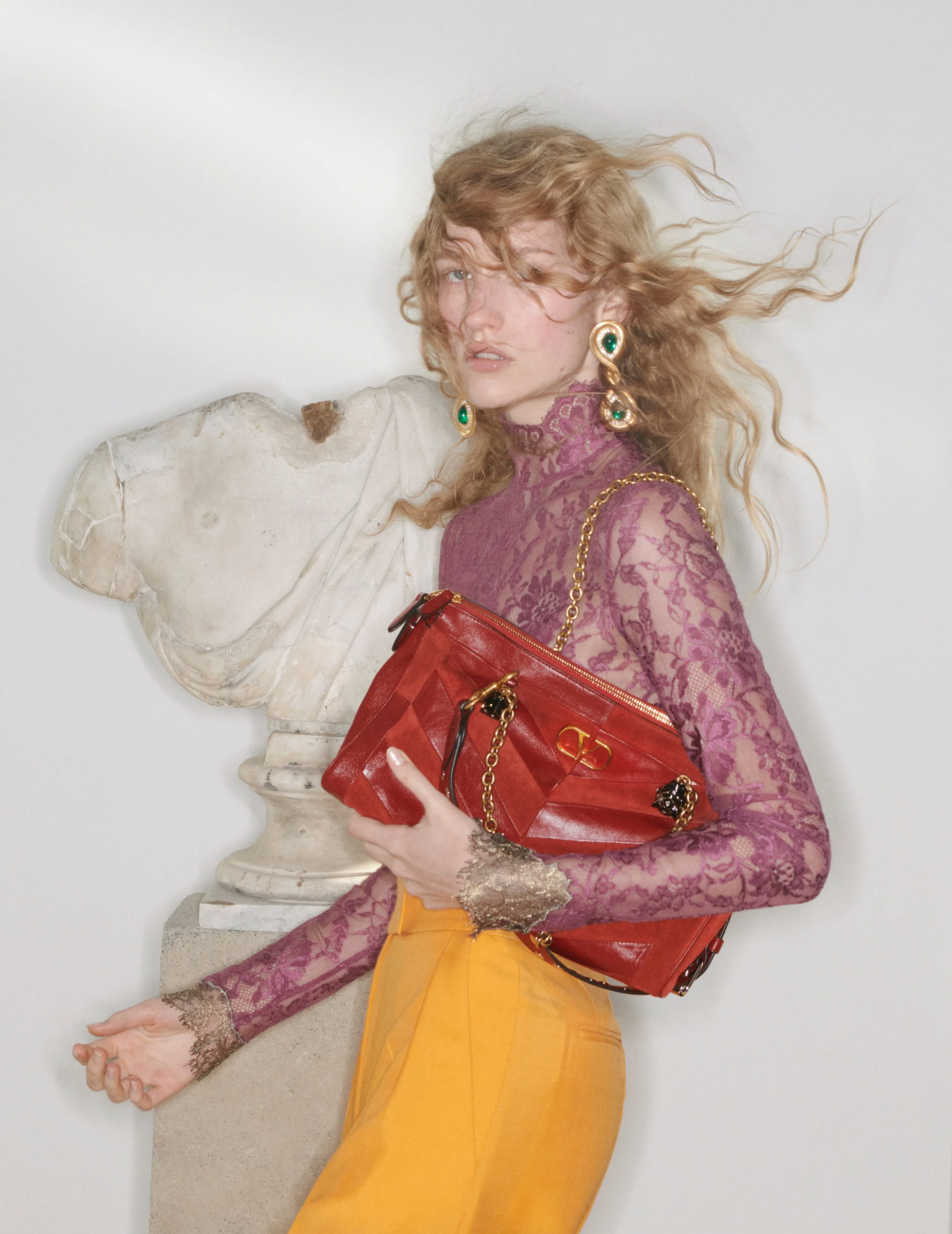
The contrast with the 1968 imagery is stark. Back then, the composition was controlled, almost architectural. Figures were placed with precision, contained within a rigid spatial logic. The white garments acted as both aesthetic and structure, reinforcing a sense of balance and stillness. Fashion existed in harmony with its surroundings, reinforcing order.
Pre-Fall 2026 disrupts that entirely.
Here, space isn’t a frame—it’s reactive. The body doesn’t pose within it; it unsettles it. Movement replaces stillness. Hair escapes discipline, gazes drift, fabrics ripple with a kind of restless energy. Colour breaks through, dismantling the visual unity that once defined the scene. There’s no interest in composure for its own sake. Instead, the campaign centres on a figure in flux—charged, unpredictable, resisting containment. It’s not about occupying space, but testing it, stretching it, pulling it into something less stable.
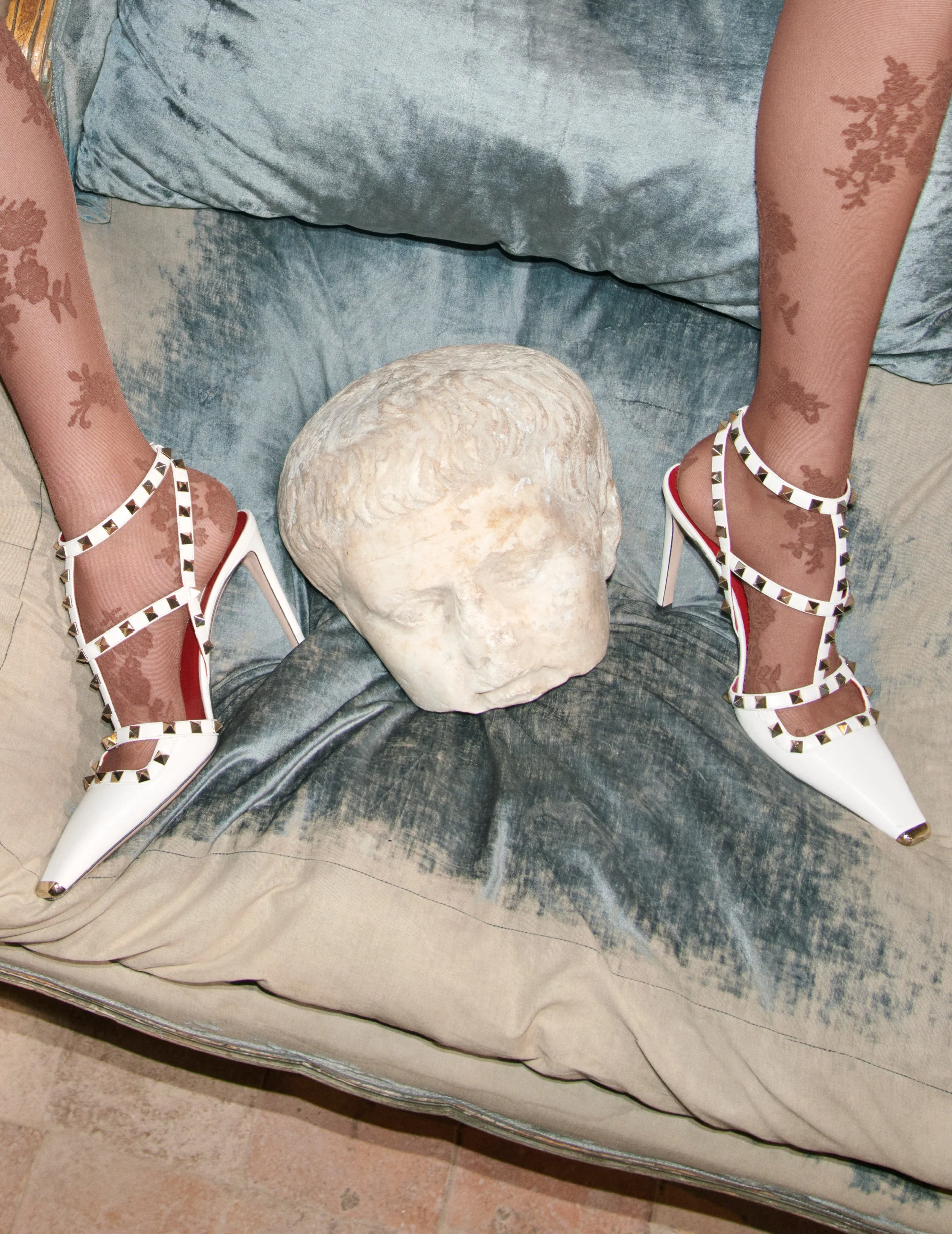
That tension carries into the campaign film, where the relationship between body and environment becomes even more fluid. Nothing lands in a fixed state. Time splinters—moments overlap, stretch, hesitate. The atmosphere is intimate but slightly off-kilter, like a conversation that never quite resolves. It doesn’t aim to clarify or explain. It leaves space for ambiguity.
There’s a quiet dissonance running through it—a sense of not fully aligning with oneself. Gestures feel slightly out of sync, as if identity is shifting mid-motion. And instead of correcting that, the campaign leans into it. It doesn’t attempt to reconstruct a stable sense of self. It loosens it.
What emerges isn’t a definitive statement, but something more open-ended. A suggestion that identity doesn’t need to be pinned down, that it can exist as something layered, unstable, and constantly in motion. Within Twombly’s palazzo—where past and present already blur—Valentino finds the perfect setting to let that idea unfold.